
RoHS and CE certification process in PCBA assembly
2023-12-19
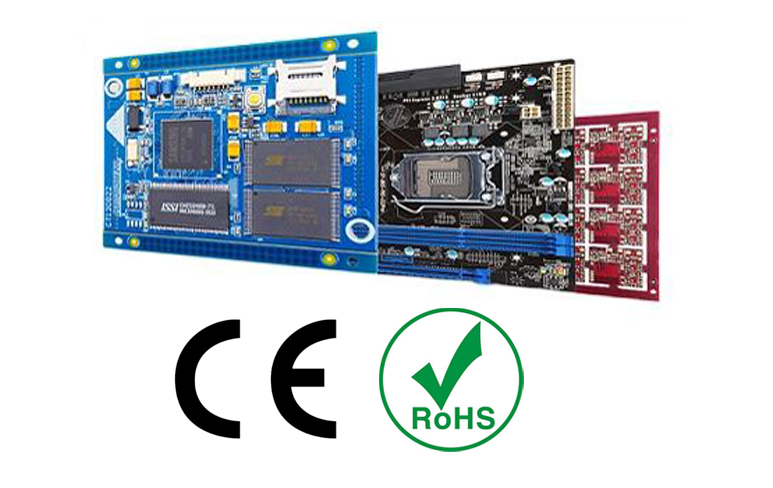
RoHS (Restriction of Hazardous Substances Directive) and CE (Conformité Européenne) certification are important regulations and certifications related to the manufacture and sale of electronic products. The following are the general steps of the RoHS and CE marking process in PCBA assembly:
RoHS certification process:
1. Prepare material data: Collect data sheets for electronic components and materials, including information on elements, materials, and compounds. Ensure that components and materials comply with the restricted substances requirements listed in the RoHS directive.
2. Supply Chain Management: Track the entire supply chain to ensure that the components and materials used are RoHS compliant. Work with suppliers to obtain RoHS compliance statements and related material certifications.
3. Conduct material testing: If in doubt, chemical analysis and laboratory testing can be performed to verify RoHS compliance for components and materials.
4. Document preparation: Prepare RoHS compliance declaration documents, including supply chain information, test reports and relevant material certification. Ensure that the documents are complete and accurate.
5. Apply for certification: Submit an application to the RoHS certification body and provide the required documents and information. The application will be reviewed and verified by the certification body.
6. Audits and Audits: Certification bodies may conduct on-site audits to ensure that the manufacturing process is RoHS compliant. They may also conduct document reviews and test sample checks.
7. Certification issuance: If the audit is passed, the certification body will issue a RoHS certification certificate. This certificate certifies that the product meets the requirements of the RoHS directive.
8. Logos and labels: Identify the RoHS compliance mark on the product to show compliance with the RoHS directive.
CE certification process:
1. Determine the product range: Determine the scope and category of electronic products that require CE marking. Different products may require different CE markings.
2. Applicable Directives: Depending on the nature and use of the product, the applicable European directives are determined. CE marking is usually based on specific directives, such as the Low Voltage Directive (LVD) or the Electromagnetic Compatibility Directive (EMC), among others.
3. Conduct a safety assessment: Conduct a safety assessment of the product to ensure that it meets the safety requirements in the applicable CE directives. This may include assessments of electrical safety, mechanical safety, radiation safety, and more.
4. Testing and Evaluation: Conduct the necessary tests and evaluations to verify that the product complies with the applicable CE directives. This may include electromagnetic compatibility testing, electrical testing, mechanical testing, etc.
5. Preparation of technical documents: Prepare product technical documents, including product specifications, test reports, design documents, safety assessments, etc. These documents will be included as part of the certification application.
6. Application for certification: Submit an application to a certification body that meets the requirements of CE certification, and provide the necessary technical documents and test reports.
7. Review and Audit: The certification body will conduct a review of the technical documentation and may conduct an on-site audit to ensure that the product meets safety and performance standards.
8. Certification issuance: If the audit is passed, the certification body will issue a CE certification certificate to prove that the product complies with the applicable CE directives.
9. Marking and labeling: Attach the CE mark to the product to indicate that the product has passed the CE certification and meets the safety and regulatory requirements of the European market.
In PCBA design and manufacturing, STG Electronic follows the processes and requirements of these certifications to ensure product compliance and meet market requirements.
How to achieve anti-ESD design of PCB
PCBA solder paste reflow is divided into five stages



SEND MESSAGE