
Comparison between SMT assembly and THT assembly
2023-12-27
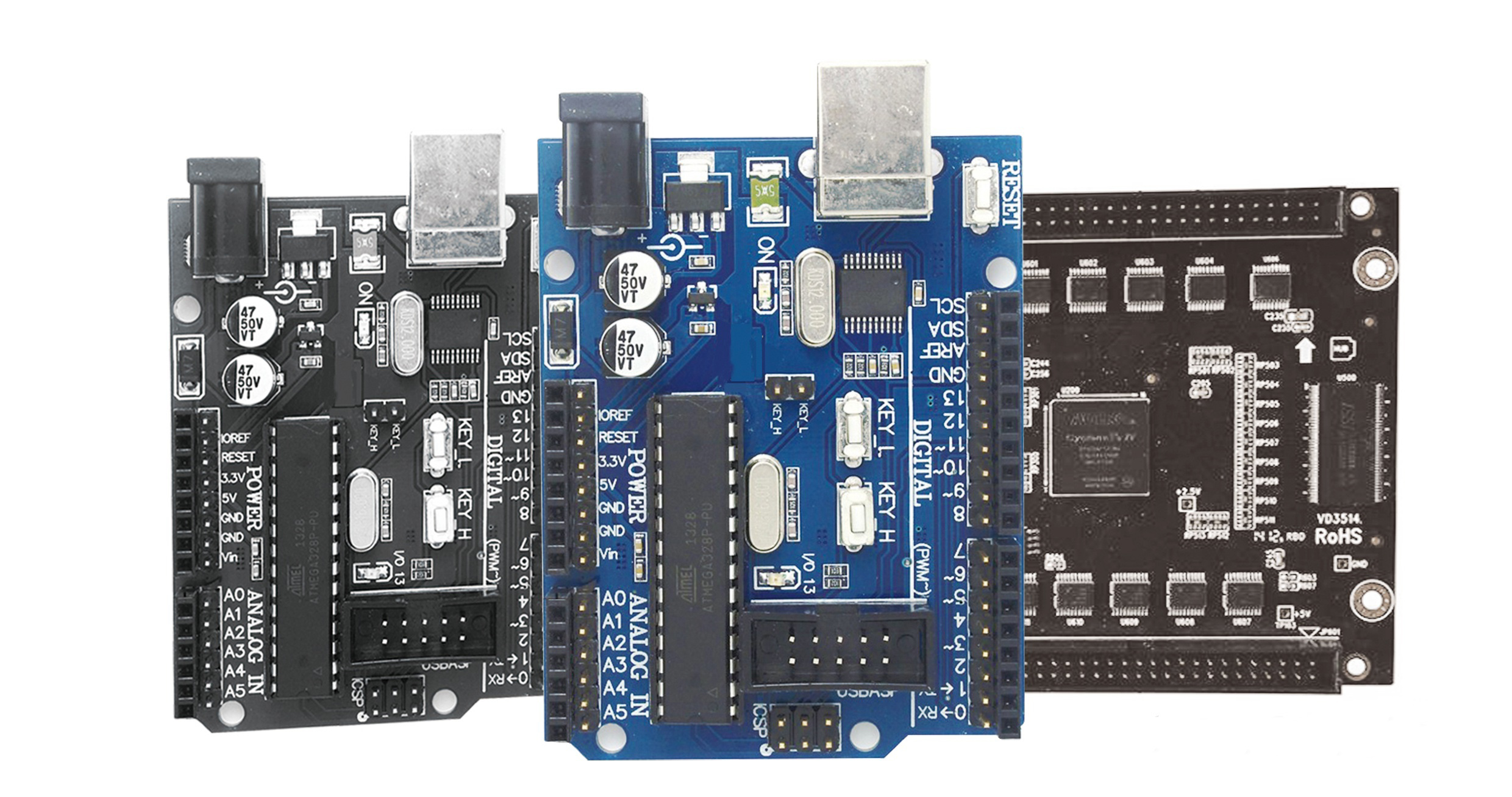
With the rapid development of electronic technology, electronic products tend to be miniaturized, and the weight and cost have dropped sharply. In the case of SMT (Surface Mount Technology) components, SMC (Surface Mount Components) are mainly soldered to the PCB by reflow soldering, which is performed in a reflow oven (an automatic device). Despite the high degree of automation that SMT components adhere to, manual soldering is still very necessary in their manufacturing process. Therefore, this article will introduce the importance of hand soldering to SMT assembly and some of its tips.
Advantages of SMT assembly
a. High assembly density
Chip components require less board surface space than traditional through-hole components. In addition, the application of SMT components has reduced electronics by 60% in terms of volume and 75% in terms of weight.
b. High reliability
The chip assembly is small in size, light in weight, and has high reliability and impact resistance. The use of automated production makes welding and placement with high reliability. As a result, nearly 90% of all electronic products are manufactured by SMT assembly.
c. High frequency
Since the chip element does not contain leads, both parasitic inductance and capacitance decrease as the frequency increases.
d. Reduce costs
Due to the rapid development and wide application of chip components, the cost of chip components is also decreasing at such a high rate, and chip resistors have the same price as hole resistors. SMT assembly simplifies the entire manufacturing process and reduces manufacturing costs. In the case of SMCs, their leads do not need to be reorganized, bent or cut, shortening the entire production process and increasing production efficiency. Once SMT assembly is applied, the overall manufacturing cost can be reduced by 30% to 50%.
Comparison between SMT assembly and THT assembly
The comparison of SMT assembly and THT (through-hole technology) assembly can fully explain the characteristics of SMT assembly. Based on the mounting technology, the essential difference between SMT and THT components is the difference in placement and through-holes. In addition, the two sides distinguish each other in several aspects, including substrates, components, devices, solder joints, and assembly technology, which can be summarized in the table below.
| Comparison Aspects | THT Assembly | SMT Assembly |
| Components | DIP PGA, lead resistor/capacitor | SOIC,SOT,LCCCP LCC, QFP BGA,CSR, chip resistor/capacitor |
| Base Board | 2.54mm-grid base board, hole diameter 0.8-0.9mm | 1.27mm-grid base board,hole diameter 0.3-0.5mm |
| Soldering Type | Wave Soldering | Reflow Soldering |
| Area | Big | Small |
| Assembly Technology | Through-hole | Surface mounting |
| Automation | Manual | Automatic chip mounter |
The difference between SMT and THT actually stems from the differences between the component types, including the component structure and the lead type. Since lead-free or short-lead components are used in SMT assembly manufacturing, the essential difference between SMT and THT is that the numbers of the components and PCBs are not exactly the same, and the components are fixed to the PCB in different ways.
The basic requirements for manual soldering of SMT components
Requirement 1: Welding materials
Thinner solder wires should be used, and active solder wires with diameters in the range of 0.5mm to 0.6mm are better. Solder paste can also be used, but it should have a no-clean flux that is low corrosive and residue-free.
Requirement 2: Tools and equipment
A thermostatic soldering iron and special tweezers should be used. The power of the thermostatic soldering iron should be less than 20W.
Requirement 3: Operator
Operators are required to have sufficient skills in SMT inspection and soldering. You should accumulate a certain amount of work experience.
Requirement 4: Operating procedures
Strict operating procedures must be implemented during this process, and SMT assembly must be implemented.
Common tools and equipment for SMC hand soldering
Tweezers
Tweezers are a soldering tool that specializes in SMC. Component soldering can be done easily by capturing both terminals of the SMC with tweezers.
Thermostatic soldering iron
The thermostatic soldering iron has a soldering function and the temperature can be controlled by the head. A thermostatic soldering iron is used because it insists on constant heating, saving half of the electrical energy and causing the temperature to rise rapidly.
Heater for soldering irons
With special heating heads of different sizes equipped with soldering irons, many SMCs can be soldered to PCBs with different pin counts, including QFPs, diodes, transistors, and ICs.
Vacuum soldering gun
The vacuum solder suction gun is mainly composed of a solder suction gun and a vacuum pump. The tip of the sniffer gun is a hollow sonotrode that is capable of heating.
Hot air soldering station
As a semi-automatic equipment using hot air as the heat source, the hot air soldering station can easily solder SMC, which is more convenient than a soldering iron. In addition, hot air soldering stations are capable of welding many types of components.
SMC Hand Soldering Skills
Resistor, capacitor and diode weld heads
First of all, the solder is on the pad, and the soldering iron should not be far away from the pad to keep the tin melting. Second, place the element on the mat with tweezers. Thirdly, one terminal is soldered and then to the other.
QFP welding head
First of all, the IC should be placed in the appropriate position and on a little solder paste to secure the three leads on the IC so that the chip can be held precisely. Second, the flux is smoothly applied to the leads, and each lead is soldered together. During the soldering process, if bridging occurs between the leads, a small amount of flux should be applied to the bridging location.
Hot air soldering station application tips
Hot air soldering stations are more convenient to use than soldering irons and can handle many types of components. ICs can be soldered by a hot air soldering station, but solder paste should be used as solder instead of solder wire. Solder paste can be applied to the pads by hand first. Once the SMC is placed, use a hot air nozzle to quickly move along the die so that all pads can be smoothly heated after soldering is complete.
As a traditional soldering method, manual soldering still plays a key role in the electronics manufacturing industry regardless of how the technology develops. SMT assembly has become the leading assembly method due to its high assembly density, high manufacturing efficiency, low cost, high reliability, and wide range of applications. The combination of automatic soldering and manual soldering is bound to have a positive impact on electronics manufacturing.
PCBA power supply short circuit analysis method
The importance of PCBA consistency and traceability


SEND MESSAGE