
The Mystery of Circuit Board "Skin Color": How to Choose the Best Color for Your PCB?
2026-01-19

When we gaze at a circuit board, the first thing that catches our eye is often its color. From classic dark green to calm black, from vibrant blue to pristine white, these colors are not random choices – behind them lies a clever balance of engineering, productivity, and aesthetic design.
Classic Choice: Why Green Becomes the Industry Standard
It is no coincidence that green still accounts for about 80% of the PCB market today. This color, known as "solder mask green oil", has been optimized for decades and performs well in several dimensions: First, green provides the best visual contrast, allowing engineers to easily identify white silk screens and copper traces during inspection, greatly reducing visual inspection error rates; Secondly, green ink has the most mature process parameters in the exposure process, and the curing effect is stable. In addition, its material cost is the most advantageous due to large-scale production, and the green spectrum has the lowest fatigue on the human eye, making it suitable for long-term operation.

Professional: Advanced application in black and dark blue
In high-end consumer electronics, black PCB has become synonymous with "professional" and "high-end". Manufacturers such as Apple and Samsung widely use black motherboards because they can perfectly hide the circuit traces and present a neat and unified visual effect inside the product. However, black PCBs have obvious flaws: high heat absorption can lead to complications in thermal management, poor contrast during maintenance inspection, and stronger lighting conditions. The dark blue PCB (like the one used in some graphics cards) is slightly better than black in terms of visual recognition, but still not as good as green.

Colorful solutions for special scenarios
White PCBs are highly preferred in LED lighting panels because they have more than 90% light reflectivity, which can maximize the efficiency of the lamp. Red PCBs are often used on test boards and education boards due to their strong color alertness, making it easier for beginners to identify different areas. In recent years, personalized colors such as purple and pink have also begun to appear in maker projects and small-batch customized products to meet the needs of brand differentiation.
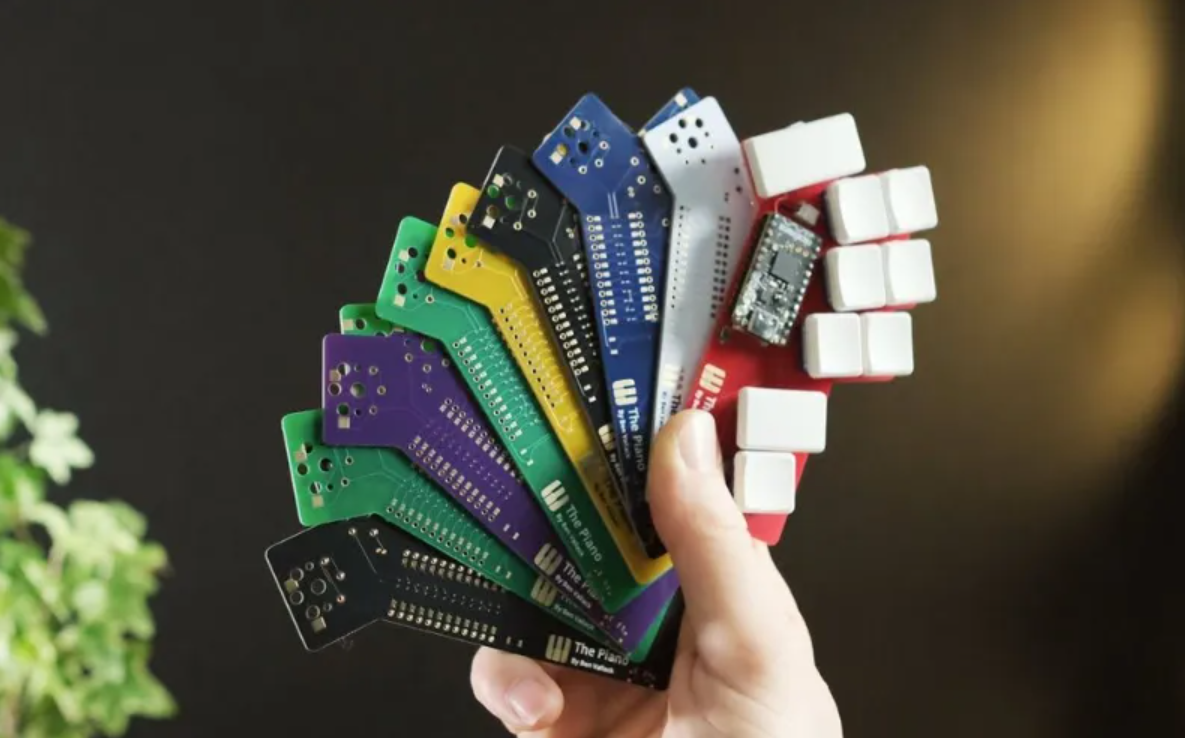
Four key factors that influence the choice
Inspection and maintenance needs: For prototype boards and test boards with high-frequency rework, green is still the first choice; The mass production stage can be adjusted according to brand needs.
Thermal management considerations: Light colors reflect more infrared than dark colors, and in high-temperature environments (such as automotive electronics), white or green may have a better heat dissipation advantage than black.
Cost control: The price of special color ink can be 20-50% higher than the standard green color, and a separate production line needs to be set up, which will increase the production cost and delivery cycle.
Branding and aesthetics: Consumer products often incorporate PCB colors into the overall design language, such as black/red for gaming hardware to create a competitive feel.
Industry trend: When pragmatism meets design aesthetics
At present, PCB color selection is polarizing: on the one hand, traditional fields such as industrial equipment and communication base stations still prioritize function, and green is absolutely dominant; On the other hand, the consumer electronics field is experiencing "color liberation", with smart watches using white PCB to create a sense of lightness, and e-sports equipment using multi-color combinations to enhance visual impact. Interestingly, the emerging transparent PCB technology is blurring this line, allowing the board itself to become a design element.
Ultimately, the ideal PCB color selection requires finding the optimal balance between visual clarity, production process, thermal performance, cost, and aesthetic appeal. As one senior engineer put it: "The best PCB color is not the prettiest color, but the one that makes your design, production, and maintenance teams feel 'just right.'" "In the microscopic world of circuit boards, color is never just color - it is a subtle intersection of engineering rationality and design sensibility.
In-depth analysis of PCB surface treatment technology: performance comparison and application choice between ENIG and hard gold plating
STG Electronic's excellent manufacturing practices have attracted attention, and JLCPCB technology upgrades have deepened the release of industry value


SEND MESSAGE