
Why Does PCBA Cost So Much?
2026-08-10
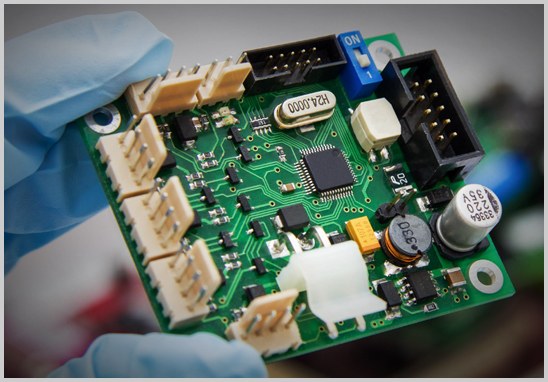
A lot of clients look at a quote and think: "It's just soldering a few components on a board – why so expensive?"
Honestly, if you only look at material costs, it's not that high. But the real cost of PCBA processing is in the things you don't see. Let me break it down.
1. Components: Genuine Parts Aren't Cheap
Every part on your BOM costs money. The same capacitor model can cost several times more if you buy it from an authorized distributor versus a grey-market source. If you require original parts with full traceability, the cost jumps immediately. On top of that, some chips have lead times of up to six months – your manufacturer often has to front the money to secure stock in advance.
Sometimes, a single chip on your BOM costs more than all the other components combined.
2. Engineering Setup: Stencils, Programs, and Fixtures
Every new board requires a stencil, a pick-and-place program, and custom test fixtures. These are one-time setup costs. For a prototype run of just a few boards, the per-board cost is steep.
A stencil costs a few hundred RMB. Test fixtures can run anywhere from a few thousand to over ten thousand depending on complexity. For high-volume orders, these setup costs get spread thin. But for prototypes or small batches, they hit hard.
3. Equipment Depreciation: Millions of Dollars for One Mounter
A high-speed SMT mounter costs well over $100,000. Reflow ovens, AOI, X-ray – none of it is cheap. Factories have to cover equipment depreciation, electricity, and daily maintenance – all of which gets built into every order.
A typical SMT machine has a service life of about 8–10 years. That's a few hundred dollars in fixed cost every single day, regardless of whether the line is running. When the machine stops, the factory loses money.
4. Quality Control: Every Test Costs Time and Money
AOI, X-ray, functional testing – each step takes time, labor, and equipment. This is often where cheap factories cut corners. They skip these tests to lower the price. But when your boards fail in the field, you'll end up paying far more than you saved.
Take a board with BGA chips. X-ray inspection takes several seconds per board. Inspecting 1,000 boards means hours of machine time and operator labor. But if you skip it and a BGA void causes a field failure down the line, you're not just looking at repair costs – you might be facing a full recall.
5. Small Batch: The Most Expensive Tier
The smaller your quantity, the higher your per-board cost. Setup costs like stencils, programming, and machine calibration are fixed. When you spread those across 10 boards versus 1,000, the difference is massive. If you're ordering prototypes, expect the price to be high – sometimes factories barely break even on small runs, taking them on only to build a relationship for future volume orders.
PCBA processing isn't about selling components. It's about selling the capability to assemble them correctly and make sure the board works.
When a quote looks suspiciously cheap, you have to ask: "Is this factory doing AOI? Are they doing X-ray? Functional testing?"
The answer will tell you exactly where your money is going – and whether the savings are worth the risk.
BGA soldering yield under 80% – what are the solutions?
To Build Reliable AI Robot, Start with High-Standard PCBA


SEND MESSAGE