
The necessity of the post-soldering process in PCBA processing
2026-03-06
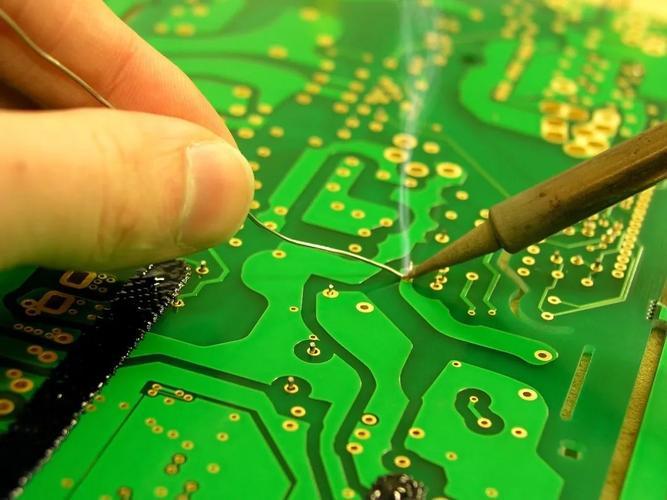
In PCBA processing, the post-soldering process refers to the process of individual repair soldering of a small number of components through manual or special equipment after completing SMT reflow soldering and DIP wave soldering. Although automated welding technology is mature, the post-welding process is still necessary to ensure product quality and functional integrity, mainly in the following four aspects:
1. Protect heat-sensitive components
Some components cannot withstand the high temperature above 260°C of reflow or wave soldering.
Typical components: precision sensors, oscillators, plastic-encapsulated optocouplers, electrolytic capacitors, etc.
Necessity: High temperatures in the furnace can lead to drift component performance, accelerated aging, or internal damage. Post-soldering uses a low-temperature soldering iron for rapid soldering, which effectively protects these components from heat damage, ensuring their precision and longevity.
Necessity: High temperatures in the furnace can lead to drift component performance, accelerated aging, or internal damage. Post-soldering uses a low-temperature soldering iron for rapid soldering, which effectively protects these components from heat damage, ensuring their precision and longevity.
2. Make up for the dead end of automatic welding
For boards with complex structures, wave soldering has physical limitations.
Typical scenarios: large area grounding solder joints (fast heat dissipation, insufficient heat is easy to solder falsely), shadowed areas with dense pin headers (solder waves are obscured), and overweight connectors (difficult to penetrate).
Necessity: Post-soldering can be supplemented with heat and solder by hand tinning or penetrating to ensure that these key solder joints are full and reliable, and avoid poor contact with the product during use.
Necessity: Post-soldering can be supplemented with heat and solder by hand tinning or penetrating to ensure that these key solder joints are full and reliable, and avoid poor contact with the product during use.
3. Adapt to the double-sided mixing process
When the PCB is designed to be double-sided mixed (with components on both sides), wave soldering can only complete the soldering on one side, and if the other side has a requirement to go through the furnace, the soldered components will melt and fall off due to secondary heating.
Necessity: The components that cannot pass through the furnace must be arranged to be welded after passing the furnace at the end, which is an inevitable choice in the process sequence.
Necessity: The components that cannot pass through the furnace must be arranged to be welded after passing the furnace at the end, which is an inevitable choice in the process sequence.
4. Meet the needs of engineering changes and repairs
In product development, trial production or maintenance, it is often necessary to replace individual components or modify circuits.
Necessity: At this time, the whole plate is neither realistic nor economical. Post-welding provides the flexibility to respond quickly, allowing for cost-effective validation of design changes or repair of faulty boards, shortening R&D cycles.
All in all, the post-welding process is a flexible complement to automated production. It solves the problems of high temperature damage, physical blind spots and special assembly through refined manual operation, and is the last line of defense to ensure the high reliability and functional integrity of PCBA.
Analysis of the key differences between SMT and DIP in PCBA processing
The importance of PCBA drying and draining


SEND MESSAGE