
PCBA solder paste reflow is divided into five stages
2023-12-18
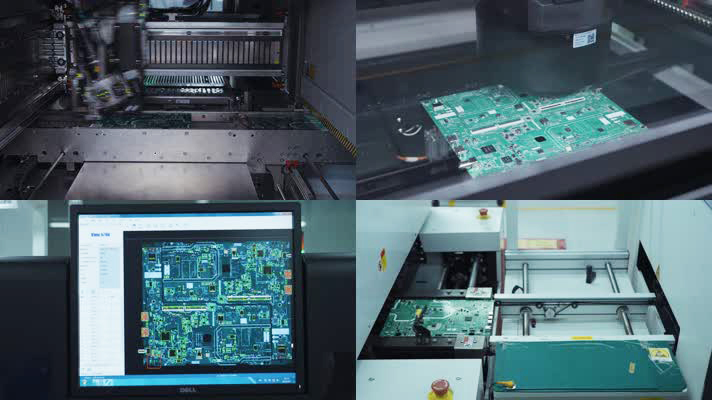
When the PCBA solder paste is put into a heated environment, the PCBA solder paste reflow is divided into five stages.
First, the solvent used to achieve the desired viscosity and silkscreen properties begins to evaporate, and the temperature rise must be slow (about 3°C per second) to limit boiling and spatter and prevent the formation of small tin beads.
The flux is active, the chemical cleaning action begins, and the same cleaning action will occur for both water-soluble fluxes and no-clean fluxes, but at slightly different temperatures. Metal oxides and certain contaminants are removed from the metal and solder particles that are about to be combined. Good metallurgy on tin joints requires a "clean" surface.
As the temperature continues to rise, the solder particles first melt separately and begin the "lampweed" process of liquefaction and surface soldering. This covers all possible surfaces and begins to form solder joints.
This stage is the most important, when the single solder particles are all melted and combined together to form liquid tin, then the surface tension action begins to form the surface of the solder pin, if the gap between the component pin and the PCB pad is more than 4mil, it is very likely that the pin and the pad will be separated due to surface tension, that is, the tin spot will be opened.
In the cooling phase, if the cooling is fast, the tin dot strength will be slightly larger, but it should not be too fast to cause temperature stress inside the component.
Summary of reflow soldering requirements:
It is important to have sufficient slow heating to safely evaporate the solvent, prevent solder bead formation and limit the internal stresses of the element due to temperature expansion, causing fracture mark reliability issues.
Second, the flux active phase must have the proper time and temperature to allow the cleaning phase to be completed when the solder particles are just beginning to melt.
The stage of solder melting in the time-temperature curve is the most important, the solder particles must be fully melted and liquefied to form a metallurgical solder, and the residual solvent and flux residue evaporate to form the solder leg surface. If this stage is too hot or too long, it can cause harm to the components and the PCB.
It is best to set the reflow temperature curve of PCBA solder paste according to the data provided by the PCBA solder paste supplier, and at the same time grasp the principle of temperature stress change in the component, that is, the heating temperature rise rate is less than 3°C per second, and the cooling temperature drop rate is less than 5°C.
If the size and weight of the PCB assembly are very similar, the same temperature profile can be used.
It is important to check whether the temperature profile is correct frequently, even daily.
RoHS and CE certification process in PCBA assembly
What are the methods for rapid detection of PCB circuit board faults?


SEND MESSAGE