
To Build Reliable AI Robot, Start with High-Standard PCBA
2026-08-06
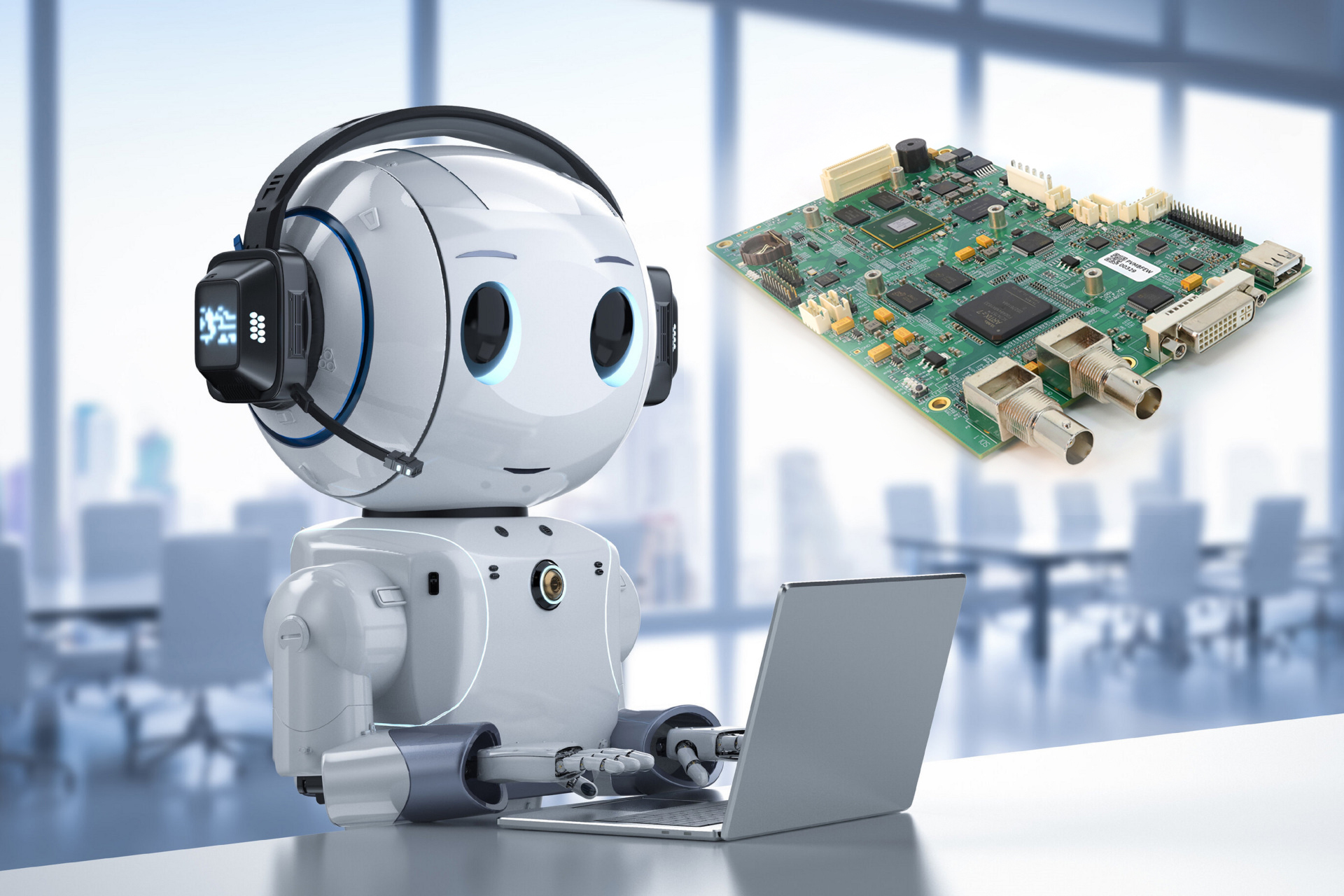
As AI robots move from laboratories to factory floors, service scenarios, and even ordinary households, the industry's demands for product stability and response speed are escalating exponentially. As the "brain" of AI robots, the core control board's performance directly determines the robot's overall operation—from command latency to system crashes. Any manufacturing defect can trigger unpredictable risks.
For PCBA manufacturers, the AI robotics industry sets what is arguably the most stringent standard in electronics manufacturing today. To withstand long-term operation in complex environments, to meet the integration requirements of high-density components, and to guarantee zero-error signal transmission, several critical thresholds must be crossed.
The First Threshold: Precision at the Micron Level
The core control board of an AI robot integrates a large number of high-density, miniaturized components—main control chips, memory modules, communication chips, and more. The precision standards of standard SMT assembly are simply insufficient here. We must employ top-tier high-speed SMT placement equipment, paired with high-precision assembly processes refined through thousands of trials, to keep the placement error of every component strictly within ±0.01 millimeters—roughly one-eighth the diameter of a human hair, allowing no room for deviation. Only by maintaining this level of precision at the placement stage can we avoid subsequent issues like cold joints or misalignment, laying a solid foundation for the stable operation of the core board.
The Second Threshold: A Comprehensive Quality Management System Across the Entire Chain
For AI robot core control boards, there is no such thing as "good enough." Any hidden defect can be amplified during long-term operation, ultimately causing complete equipment shutdown. Therefore, PCBA manufacturers must extend quality control to every stage of production—from incoming material inspection, to in-process control during soldering and placement, to final inspection before shipment. Every step must be safeguarded by professional equipment. We deploy AI-powered Automated Optical Inspection (AOI) to detect surface defects, use X-ray inspection to identify internal soldering issues in BGA and other packaged components, and employ In-Circuit Testing (ICT) to thoroughly verify the electrical performance of every circuit—reducing defect rates to near zero, from structure to performance.
The Third Threshold: Foundational Environmental Control and System Development—Often Overlooked, Yet Profoundly Impactful
Many are unaware that PCB moisture absorption or incorrect solder paste temperature can introduce long-term reliability risks to the core board. In our production facility, temperature and humidity are monitored and controlled 24/7. PCBs are pre-baked following standard procedures upon arrival to remove moisture. Solder paste—from cold storage to tempering to mixing—follows strict process specifications at every step. These seemingly minor details are precisely what enable a core board to operate stably for eight to ten years in the field. Beyond that, sustained R&D investment and authoritative certifications are also proof of capability. Achieving ISO9001 quality management certification and UL safety certification is not just about obtaining a certificate—it embeds standardized requirements into every production process, demonstrating our ability to mass-produce PCBA that meets the high-end requirements of AI products.
The rise of the AI robotics industry brings new opportunities to electronics manufacturing—and new challenges. For PCBA manufacturers, there is no room for "good enough." Only through a full-chain upgrade—from equipment and processes to inspection and management—can we truly meet the reliability and intelligence demands that AI robots place on core control boards.
Why Does PCBA Cost So Much?
Board Debugging Unstable? The root cause is mostly hidden in the PCB power and PCBA design.


SEND MESSAGE