
Core Advantages and Industry Impact of SMT Technology
2026-03-12
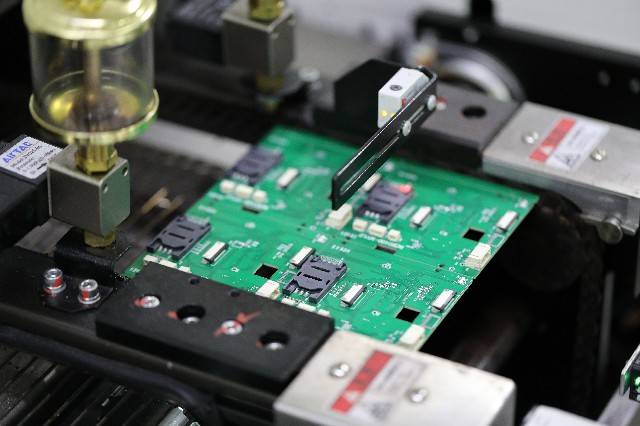
In today's electronics manufacturing field, Surface Mount Technology (SMT) has become a key process to achieve miniaturization, high performance, and high reliability of electronic products. SMT technology enables high-density, compact, and lightweight assembly of electronic products by compressing traditional electronic components into smaller surface-mount components. This technology not only enhances the performance and reliability of electronic products but also significantly reduces production costs, promoting automation and efficiency development in the electronics manufacturing industry.
The main characteristic of SMT technology is its extremely high assembly density. The volume and weight of surface-mount components are usually about 1/10 of those of traditional through-hole components. By adopting SMT technology, the size of electronic products can be reduced by 40% to 60%, and the weight is reduced by 60% to 80%. This significant size and weight advantage makes electronic products more portable while providing possibilities for the integration of complex functions. In addition, SMT technology offers high reliability, low solder joint defect rates, and strong vibration resistance, allowing electronic products to maintain stable operation in various complex environments.
In terms of high-frequency performance, SMT technology performs excellently. Due to the small size and short leads of surface-mount components, electromagnetic and radio-frequency interference is effectively reduced. This characteristic is particularly important in high-frequency circuits, ensuring stable signal transmission and improving the performance and stability of electronic products. Moreover, SMT technology facilitates automated production, which greatly increases production efficiency and significantly reduces production costs, estimated to be 30% to 50%. At the same time, automated production saves resources in materials, energy, equipment, labor, and time, enhancing overall production efficiency.
In summary, due to its high assembly density, high reliability, excellent high-frequency performance, and ease of automation, SMT technology has become an indispensable technology in modern electronics manufacturing. As electronic products continue to become smaller and more functional, SMT technology will continue to play an important role in the electronics manufacturing sector, driving the continuous development of the industry.
What are the surface assembly methods for PCBA processing?
The principle and treatment method of PCB green oil foaming and circuit board foaming after reflow soldering


SEND MESSAGE