
What Causes Aging of Capacitors and Resistors on PCBA?
2026-07-23
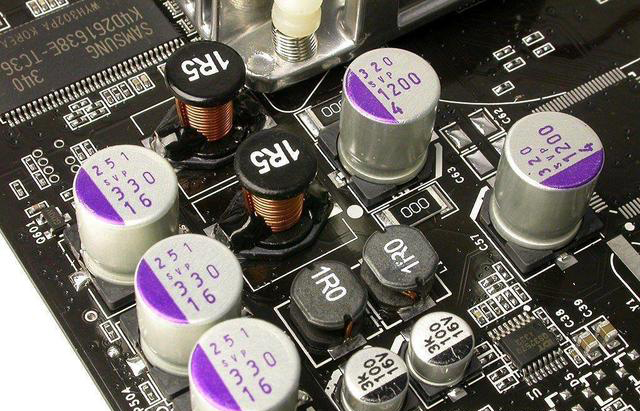
The aging causes of capacitors and resistors on a circuit board cannot be generalized. The same high temperature that causes an electrolytic capacitor to "dry out" may cause a resistor to "drift" in value, while a ceramic capacitor might "crack" due to mechanical stress. So what really matters is understanding the aging mechanism of each component type individually. Looking closely, the aging of a board is actually highly concentrated in a few specific areas.
Resistors
Resistors may look sturdy, but their aging is traceable. The most common failure mode is resistance value drift. The resistive material slowly oxidizes in the air – humidity accelerates this process – and the resistance value gradually drifts away from its original tolerance. In more severe cases, open circuits occur, often caused by electrical overstress – voltage or power exceeding the component's limits, causing the resistor body to overheat and burn out, leading to electrode detachment or film cracking.
Capacitors
Capacitors are where aging really happens, and they must be examined by type because the mechanisms are completely different:
Aluminum Electrolytic Capacitors – These are among the most aging-prone components on a PCB. In many switching power supplies, they are the reliability bottleneck. The electrolyte gradually evaporates through the top seal – the hotter it gets, the faster it evaporates (for every 10°C rise in temperature, lifespan roughly halves). The result is reduced capacitance, increased ESR (Equivalent Series Resistance), poorer filtering, and increased self-heating – a vicious cycle. In most boards that "fail after a few years," this is the root cause. These are truly "consumable" components with a defined end-of-life.
Ceramic Capacitors (MLCC) – These are susceptible to both "external force" and "electrical stress." They are sensitive to mechanical stress. Uneven heating during soldering or stress from board flexing can cause micro-cracks internally. These cracks don't cause immediate failure but gradually expand through temperature cycling, eventually leading to leakage or short circuits. Additionally, in humid environments, silver electrodes can undergo electrochemical migration, forming "dendrites" that create short circuits.
Tantalum capacitors and film capacitors are relatively stable and are not a major source of aging, so we will not elaborate on them here.
Electrolytic capacitors are most vulnerable to heat drying out the electrolyte; resistors are most vulnerable to power overloads burning them out; MLCCs are most vulnerable to mechanical stress causing cracks, as well as moisture ingress. Understanding their respective weaknesses helps you make informed component selection decisions.
Why Do Industrial Devices Get More Expensive – and Why PCB Matters More Than Chips?
Analyzing PCB Impedance Control Methods


SEND MESSAGE