
Industry Standards for PCBA Defect Rates: A Comprehensive Overview
2025-08-08
Introduction
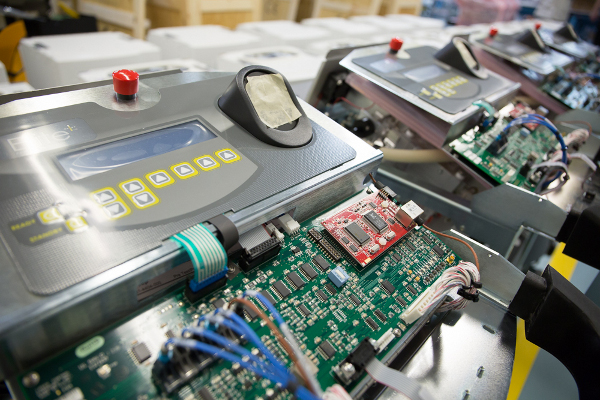
Printed Circuit Board Assembly (PCBA) is a critical process in electronics manufacturing, where components are mounted onto a PCB to create functional electronic devices. Ensuring high-quality PCBA production is essential for reliability, performance, and cost efficiency. One of the key metrics used to assess manufacturing quality is the defect rate, typically measured in Defects Per Million Opportunities (DPMO) or Parts Per Million (PPM). This article explores industry-accepted standards for PCBA defect rates and best practices for maintaining optimal quality.
Key Industry Standards for PCBA Defect Rates
1. IPC-A-610: Acceptability of Electronic Assemblies
The IPC-A-610 standard, developed by the Association Connecting Electronics Industries (IPC), is the most widely recognized benchmark for PCBA quality. It defines acceptable and non-conforming conditions for soldered connections, component placement, and other assembly aspects.
• Class 1 (General Electronics): Allows a higher defect rate (~1,000 PPM or 0.1%) for non-critical applications.
• Class 2 (Dedicated Service Electronics): Requires tighter controls (~500 PPM or 0.05%) for devices where continued performance is important.
• Class 3 (High-Reliability Electronics): Demands the strictest standards (~100 PPM or 0.01%) for mission-critical applications like aerospace and medical devices.
2. ISO 9001 & IATF 16949 (Automotive Standards)
For automotive and high-reliability industries, IATF 16949 (a supplement to ISO 9001) imposes stringent defect rate requirements, often targeting <50 PPM (0.005%) for critical components.
3. Six Sigma in PCBA Manufacturing
Many manufacturers adopt Six Sigma methodologies, aiming for ≤3.4 DPMO (0.00034%) in defect rates. While this is an aspirational goal, leading electronics manufacturers strive for <100 PPM in high-volume production.
Common Causes of PCBA Defects
Understanding defect sources helps in maintaining compliance with industry standards:
• Soldering defects (bridging, cold joints, voids)
• Component misalignment or missing parts
• PCB fabrication issues (delamination, poor plating)
• ESD (Electrostatic Discharge) damage
• Inadequate testing and inspection
Best Practices for Reducing PCBA Defect Rates
1. Implement Automated Optical Inspection (AOI) & X-ray Testing
2. Enforce Strict Process Controls (SPC – Statistical Process Control)
3. Use High-Quality Materials & Certified Components
4. Train Operators to IPC Standards
5. Conduct Regular Process Audits & Failure Mode Analysis (FMEA)
Conclusion
The acceptable PCBA defect rate varies by industry and application, but key standards like IPC-A-610, ISO 9001, and Six Sigma provide clear benchmarks. Manufacturers must adopt robust quality control measures, advanced inspection techniques, and continuous improvement strategies to meet these standards. By doing so, they can minimize rework costs, enhance product reliability, and maintain competitiveness in the electronics industry.
For further details, refer to IPC-7351 (land pattern design), J-STD-001 (soldering requirements), and MIL-STD-883 (military-grade reliability) for additional guidance.
Printed Circuit Board Assembly (PCBA) is a critical process in electronics manufacturing, where components are mounted onto a PCB to create functional electronic devices. Ensuring high-quality PCBA production is essential for reliability, performance, and cost efficiency. One of the key metrics used to assess manufacturing quality is the defect rate, typically measured in Defects Per Million Opportunities (DPMO) or Parts Per Million (PPM). This article explores industry-accepted standards for PCBA defect rates and best practices for maintaining optimal quality.
Key Industry Standards for PCBA Defect Rates
1. IPC-A-610: Acceptability of Electronic Assemblies
The IPC-A-610 standard, developed by the Association Connecting Electronics Industries (IPC), is the most widely recognized benchmark for PCBA quality. It defines acceptable and non-conforming conditions for soldered connections, component placement, and other assembly aspects.
• Class 1 (General Electronics): Allows a higher defect rate (~1,000 PPM or 0.1%) for non-critical applications.
• Class 2 (Dedicated Service Electronics): Requires tighter controls (~500 PPM or 0.05%) for devices where continued performance is important.
• Class 3 (High-Reliability Electronics): Demands the strictest standards (~100 PPM or 0.01%) for mission-critical applications like aerospace and medical devices.
2. ISO 9001 & IATF 16949 (Automotive Standards)
For automotive and high-reliability industries, IATF 16949 (a supplement to ISO 9001) imposes stringent defect rate requirements, often targeting <50 PPM (0.005%) for critical components.
3. Six Sigma in PCBA Manufacturing
Many manufacturers adopt Six Sigma methodologies, aiming for ≤3.4 DPMO (0.00034%) in defect rates. While this is an aspirational goal, leading electronics manufacturers strive for <100 PPM in high-volume production.
Common Causes of PCBA Defects
Understanding defect sources helps in maintaining compliance with industry standards:
• Soldering defects (bridging, cold joints, voids)
• Component misalignment or missing parts
• PCB fabrication issues (delamination, poor plating)
• ESD (Electrostatic Discharge) damage
• Inadequate testing and inspection
Best Practices for Reducing PCBA Defect Rates
1. Implement Automated Optical Inspection (AOI) & X-ray Testing
2. Enforce Strict Process Controls (SPC – Statistical Process Control)
3. Use High-Quality Materials & Certified Components
4. Train Operators to IPC Standards
5. Conduct Regular Process Audits & Failure Mode Analysis (FMEA)
Conclusion
The acceptable PCBA defect rate varies by industry and application, but key standards like IPC-A-610, ISO 9001, and Six Sigma provide clear benchmarks. Manufacturers must adopt robust quality control measures, advanced inspection techniques, and continuous improvement strategies to meet these standards. By doing so, they can minimize rework costs, enhance product reliability, and maintain competitiveness in the electronics industry.
For further details, refer to IPC-7351 (land pattern design), J-STD-001 (soldering requirements), and MIL-STD-883 (military-grade reliability) for additional guidance.
The Wide-Ranging Applications of PCBA Products in Modern Technology
How AI Computing Power is Driving Innovation in the PCB Industry



SEND MESSAGE