
What is the difference between ENIG and electroplated gold finish on PCBs?
2026-05-07
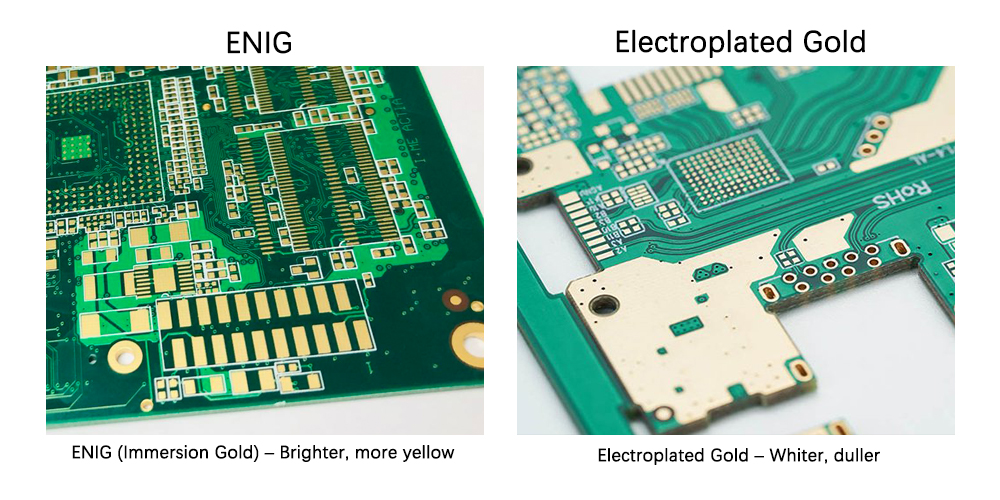
The process differences between ENIG (Immersion Gold) and Electroplated Gold are as follows:
① ENIG (Immersion Gold) uses a chemical reaction method to deposit a gold layer. It is a type of electroless nickel immersion gold process and generally produces a thicker gold layer.
② Electroplated Gold uses an electrolytic process based on electric current, also known as electroplating.
In practical product applications, 95% of gold-plated boards are ENIG, because the poor solderability of electroplated gold is its fatal disadvantage.
What are the advantages of ENIG (Immersion Gold)?
⑴ ENIG produces a much thicker gold layer compared to electroplated gold. ENIG appears as a bright golden-yellow color, while electroplated gold looks slightly whiter (due to the nickel color underneath).
⑵ ENIG is easier to solder than electroplated gold and does not cause soldering defects. For products that require wire bonding, ENIG is more favorable for the bonding process.
⑶ On ENIG boards, only the solder pads have immersion gold; there is no gold underneath the solder mask (only copper). To distinguish the two processes on an actual board, you can wipe off the solder mask — if you see copper underneath, it is ENIG.
⑷ On ENIG boards, only the solder pads have gold, so the adhesion between the solder mask and the copper layer on the traces is stronger. Engineers making compensation adjustments do not need to worry about affecting trace spacing.
⑸ As circuitry becomes increasingly precise, STG Electronic has achieved line width/spacing of 3.5mil. Electroplated gold is prone to creating gold whiskers (short circuits). ENIG boards have gold only on the pads, so gold whisker shorts will not occur.
⑹ Compared to electroplated gold, ENIG has a denser crystal structure, is less prone to oxidation, and offers better flatness.
PCBA Cost Breakdown: Where Does Your Money Actually Go?
Through-Hole vs SMT Assembly: Which One Fits Your Project?


SEND MESSAGE