
What is SMT?
2026-02-26
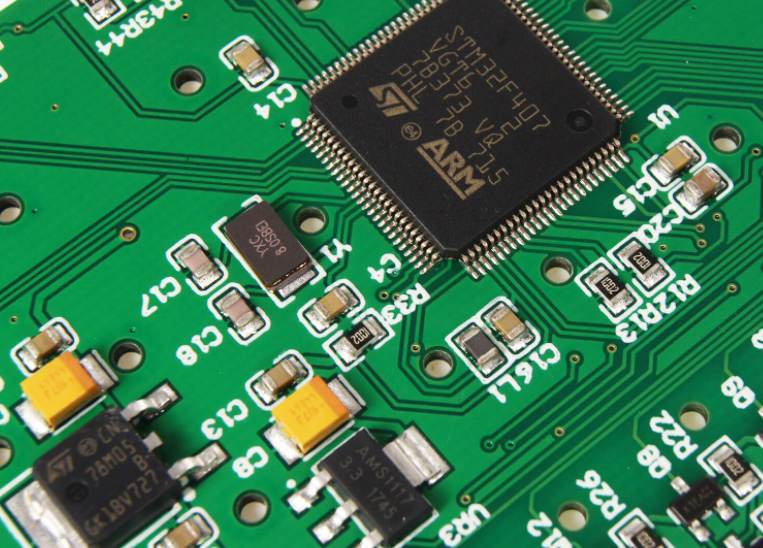
SMT stands for Surface Mount Technology. It is a manufacturing technology that directly mounts and solders electronic components onto the surface of a printed circuit board (PCB), and it is currently the most mainstream core process in the electronics manufacturing industry.
We can understand it from the following aspects:
1. What is it?
Before the advent of SMT, electronic assembly mainly relied on through-hole technology. At that time, resistors and capacitors had long leads that needed to be inserted into drilled holes on the circuit board and then soldered on the other side. This method not only took up a lot of space but also had low production efficiency.
SMT is completely different. Its components are either leadless or have very short leads, known as "surface-mount" components. Machines place them directly onto the solder pads on the PCB surface, and then through overall heating (reflow soldering), the components are firmly fixed.
2. What is the core process?
The production of a mobile phone motherboard or a computer graphics card generally follows the SMT process as follows:
Solder paste printing: First, a machine similar to a "printer" applies solder paste precisely onto the PCB pads through a stencil.
Component placement: High-speed pick-and-place machines pick up tiny capacitors, resistors, or complex chips using suction nozzles and place them with extremely high precision (usually within microns) on the positions with solder paste.
Reflow soldering: The PCB with mounted components enters the reflow oven. After heating, the solder paste melts and solidifies, forming a firm electrical connection.
Inspection: Finally, automated optical inspection or X-ray inspection is conducted to ensure each component is properly mounted without cold solder joints or short circuits.
3. Why is SMT so important?
Smaller and lighter products: Without long leads, components can be made extremely small (such as 01005 packages, smaller than a sesame seed), enabling products like smartphones and smartwatches.
Better performance: Components are directly attached to the PCB, shortening the circuit paths, speeding up signal transmission, and reducing interference.
Suitable for automated large-scale production: Pick-and-place machines can mount tens of thousands of components per hour, offering high efficiency and consistency far beyond manual assembly.
In short, without SMT, there would be no highly integrated, intelligent electronic products as we have today.
PCBA: How the "Brain" of Electronic Products Is Born?
What is PCBA virtual soldering? Methods to solve PCBA virtual soldering


SEND MESSAGE