
The demand for precision medicine has surged, and high-end medical equipment PCBA has entered the dual extreme challenge of "miniaturization and reliability"
2026-01-29
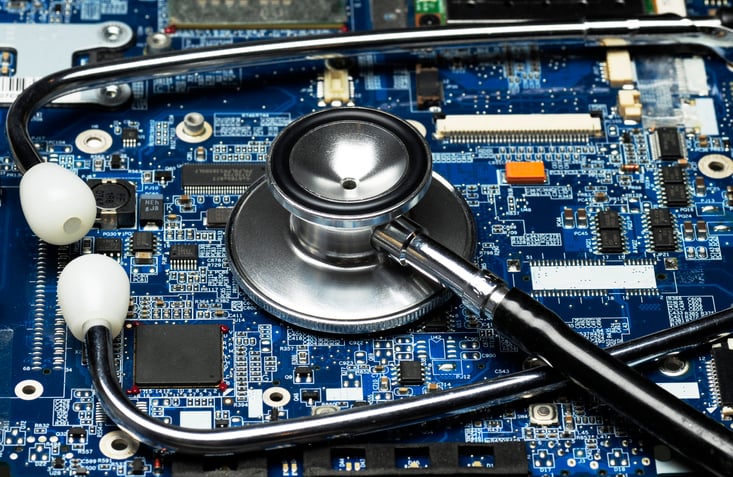
With the acceleration of global population aging and the popularization of precision medicine concepts, the market for medical electronic devices such as wearable monitoring devices, remote diagnosis and treatment systems, high-end imaging and minimally invasive surgical robots is growing rapidly. As the core carrier of these devices, printed circuit board assembly (PCBA) for medical devices is facing "double limits" that far exceed consumer electronics and general industry standards: extreme miniaturization and ultimate reliability, which is becoming the competitive frontier of global high-precision electronic manufacturing technology.
The current technology hotspots focus on meeting three core needs:
First, in the field of implantable and wearable devices, such as pacemakers and continuous glucose monitors, PCBA must be highly integrated in millimeter-level space and use biocompatible packaging materials. Its design requires a balance of ultra-low power consumption and stable wireless data transmission, which places the requirement for nanometer-level accuracy in circuit layout, chip selection, and soldering processes.
Secondly, in life support and diagnostic equipment, such as ventilators, hematology analyzers, and portable ultrasound, the reliability of PCBA is directly related to the safety of patients. Industry benchmarks are promoting enhanced design based on the medical IEC 60601 standard, including the use of higher-grade components, redundant circuit design, and rigorous environmental stress screening (ESS) and accelerated life testing to ensure that equipment can achieve "zero failure" operation in a variety of clinical environments.
More cutting-edge, in surgical robots and high-precision imaging equipment, PCBA need to process high-speed, high-bandwidth real-time data streams. This drives the widespread adoption of advanced processes such as arbitrary layer HDI, rigid-flex boards, and embedded components to ensure signal integrity while reducing device volume and mechanical noise.
Industry analysis pointed out that the market barriers of medical device PCBA are not only technology, but also long certification cycles (FDA, CE), complete traceability systems and absolute stability of the supply chain. The world's leading electronics manufacturing services (EMS) companies are investing more in aseptic clean shops, automated production lines, and process validation to meet the stringent requirements of medical device quality management systems such as ISO 13485.
Experts believe that the development of PCBA for medical devices in the future will be closely linked to the integration of new materials (such as flexible substrates), new sensors and artificial intelligence chips. Suppliers who can provide a "design-manufacture-certify" one-stop solution and have the ability to collaborate across disciplines will dominate the medical electronics market worth hundreds of billions of dollars. Progress in this field will directly promote personalized and inclusive future medical care to become a reality.
What is SMT Machining? What preparations do I need to do before SMT machining?
The PCBA industry has ushered in a wave of "green intelligent manufacturing" transformation, and the supply chain pattern has been accelerated to reshape


SEND MESSAGE