
Surging Demand for AI Servers Brings ‘Sweet Headaches’ to High-End PCBA Supply Chain
2026-01-13
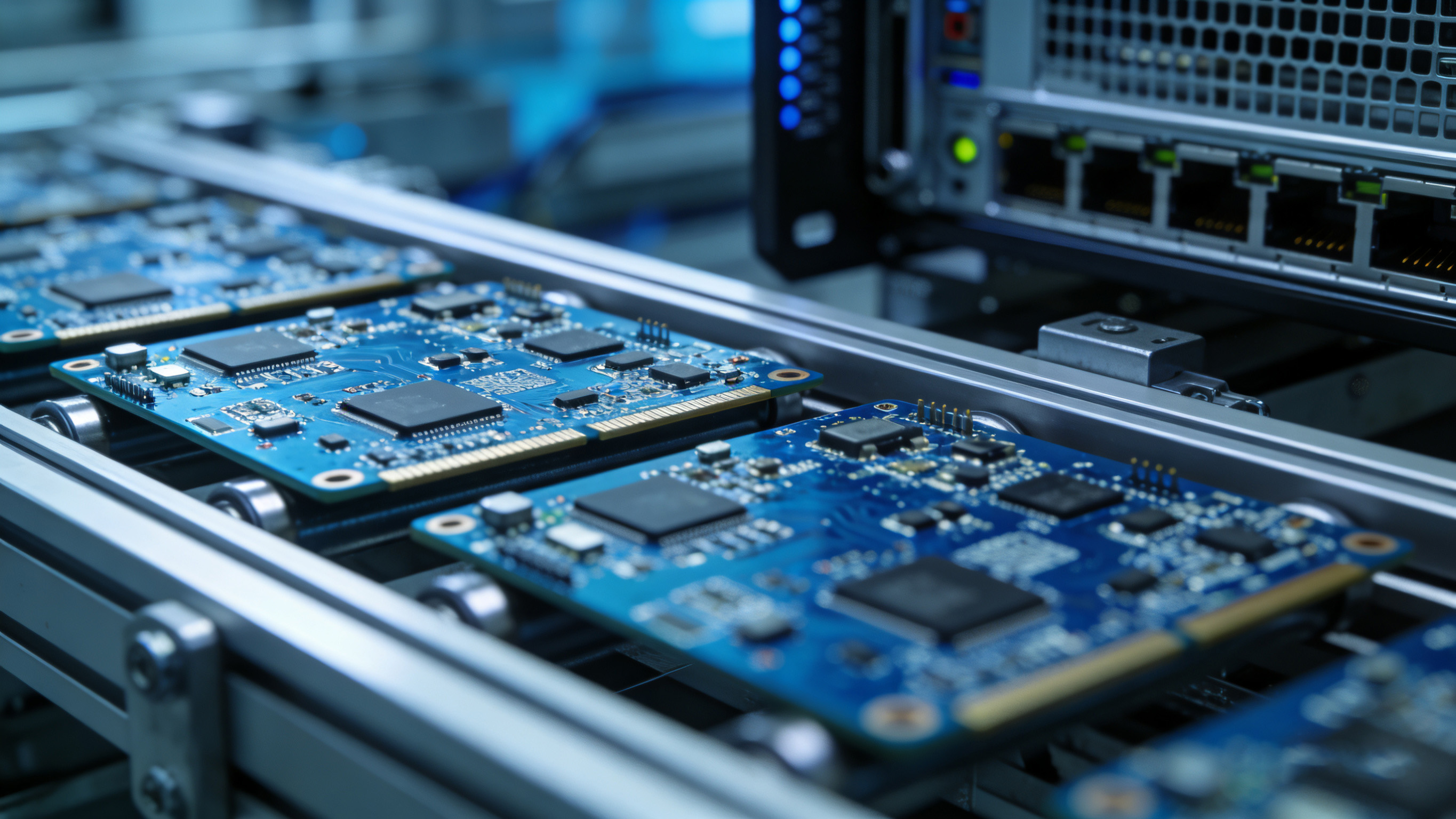
As the global AI race intensifies, demand for AI servers has exploded. This trend is rapidly impacting the core hardware foundation of these servers—the printed circuit board assemblies (PCBA). In particular, there is unprecedented demand and challenges for high-end, high-density interconnect (HDI) PCBAs used in GPU acceleration cards, high-speed switch boards, and other applications, ushering in a strong yet challenging growth cycle for the related supply chain.
“Orders are already lined up through the first quarter of next year, but the pressure hasn’t eased at all,” admitted a senior executive from a leading server PCB manufacturer. AI server PCBAs differ significantly from traditional products: their circuit precision requirements are extremely high, layers are generally 20 or more, and they must integrate high-speed materials to support high-bandwidth data transmission. This has led to ongoing tight supply of core laminate materials (such as M6 and M7 grade high-speed copper-clad laminates) and specialty chemicals (like high-end photoresist inks), with some key materials now taking over 30 weeks for delivery, and prices rising notably.
The bottleneck in high demand isn’t limited to materials. Several industry technology managers pointed out that AI server motherboard PCBA processing has become significantly more complex, posing a stringent test to a company’s technological foundation and process control capabilities. “The circuits are getting finer, tolerances require micron-level precision, and there’s the challenge of heat dissipation and signal integrity under high-speed signals. This isn’t something that can be solved by just ramping up capacity,” said a process director at a major electronics manufacturing services (EMS) company. Advanced laser drilling capabilities, fine-line etching technologies, and sophisticated inspection equipment (like AOI and AXI) have become necessary standards, triggering an internal industry technology upgrade race.
At the same time, supply chain layouts are undergoing profound changes. To be closer to customers and ensure stable supply, several global leading EMS and PCB companies have recently announced new expansion plans, with investments strategically focused on regions like Southeast Asia and Mexico to build more resilient localized supply chains to serve major global cloud service providers and system integrators.
Analysts note that this AI-driven PCBA demand is both structural and sustainable. Although short-term challenges include the ‘sweet headache’ of costs and lead times, it will also accelerate restructuring and technological advancement in the high-end PCBA industry in China and globally. Companies that can first establish advantages in material co-development, advanced process breakthroughs, and global capacity coordination are likely to dominate this industrial wave and share in the long-term benefits of AI infrastructure construction. Over the next six months, the stability of supply chain delivery and technological innovation capabilities will become key metrics for assessing the competitiveness of relevant enterprises.
The wave of smart cars has driven innovation in the PCBA industry, and the demand for high-density interconnected boards has surged
The PCBA supply chain is facing severe challenges: chip shortages and rising costs are squeezed


SEND MESSAGE