
Methods for Waterproofing, Moisture-proofing, and Corrosion Resistance in PCBA Circuit Boards
2025-07-11
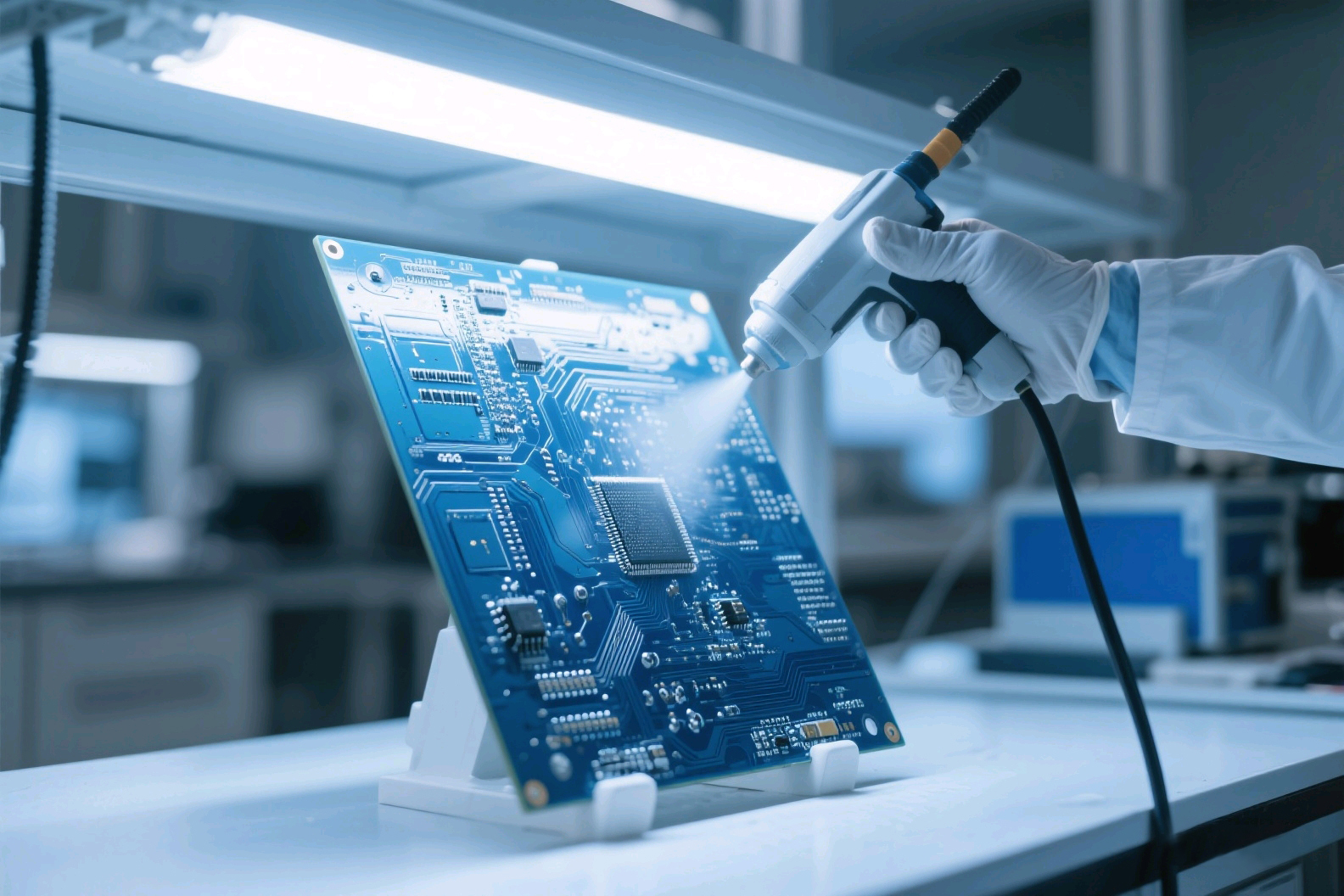
To ensure the reliability and longevity of PCBA (Printed Circuit Board Assembly) in harsh environments, waterproofing, moisture-proofing, and corrosion resistance are critical. Below are effective methods to achieve these protections:
1. Conformal Coating
A thin protective film is applied to the PCB surface to shield against moisture, dust, and chemicals. Common types include:
Acrylic (AR) – Easy to apply and remove, suitable for general moisture protection.
- Silicone (SR) – Excellent flexibility and high-temperature resistance, ideal for harsh conditions.
- Urethane (UR) – Provides strong chemical and abrasion resistance.
- Epoxy (ER) – Forms a hard, durable layer but is difficult to rework.
2. Potting (Encapsulation)
The PCBA is encased in a protective resin (e.g., epoxy, silicone, or polyurethane) to completely seal it from environmental exposure. This method offers superior waterproofing and mechanical protection.
3. Hydrophobic Nano-coatings
Specialized nano-coatings repel water and prevent moisture absorption without adding significant thickness, making them suitable for high-frequency or miniaturized circuits.
4. Hermetic Sealing
For extreme environments, the PCBA is enclosed in an airtight metal or ceramic casing filled with inert gas to block moisture and oxygen.
5. Material Selection
- Use corrosion-resistant substrates like ceramic or high-Tg (glass transition temperature) FR4.
- Choose gold or immersion silver (ENIG) surface finishes over HASL (Hot Air Solder Leveling) to reduce oxidation.
- Employ moisture-resistant solder masks and sealed connectors.
6. Desiccants & Humidity Indicators
Include silica gel packets or humidity indicator cards in enclosures to absorb residual moisture and monitor environmental conditions.
7. Design Considerations
- Increased Creepage & Clearance – Space out high-voltage traces to prevent moisture-induced arcing.
- Drainage Vents – Allow condensation to escape in non-hermetic designs.
- Conformal Coating-Friendly Layout – Avoid coating-sensitive components (e.g., connectors, heat sinks).
8. Testing & Validation
- IP Rating Tests – Verify waterproofing levels (e.g., IP67, IP68).
- Humidity Chamber Testing – Expose PCBA to 85°C/85% RH to assess moisture resistance.
- Salt Spray Test – Evaluate corrosion resistance in saline environments.
Conclusion
By combining conformal coatings, potting, proper material selection, and robust design, PCBA can achieve excellent waterproofing, moisture-proofing, and corrosion resistance, ensuring reliability in demanding applications such as automotive, marine, and industrial electronics.
Automotive PCBs Boom as EVs and ADAS Systems Require More Complex Designs
Common Defects in PCB Pad During Wave Soldering and Their Solutions


SEND MESSAGE