
How can the PCB manufacturing industry reduce the cost of electroless nickel immersion gold (ENIG)?
2026-03-18
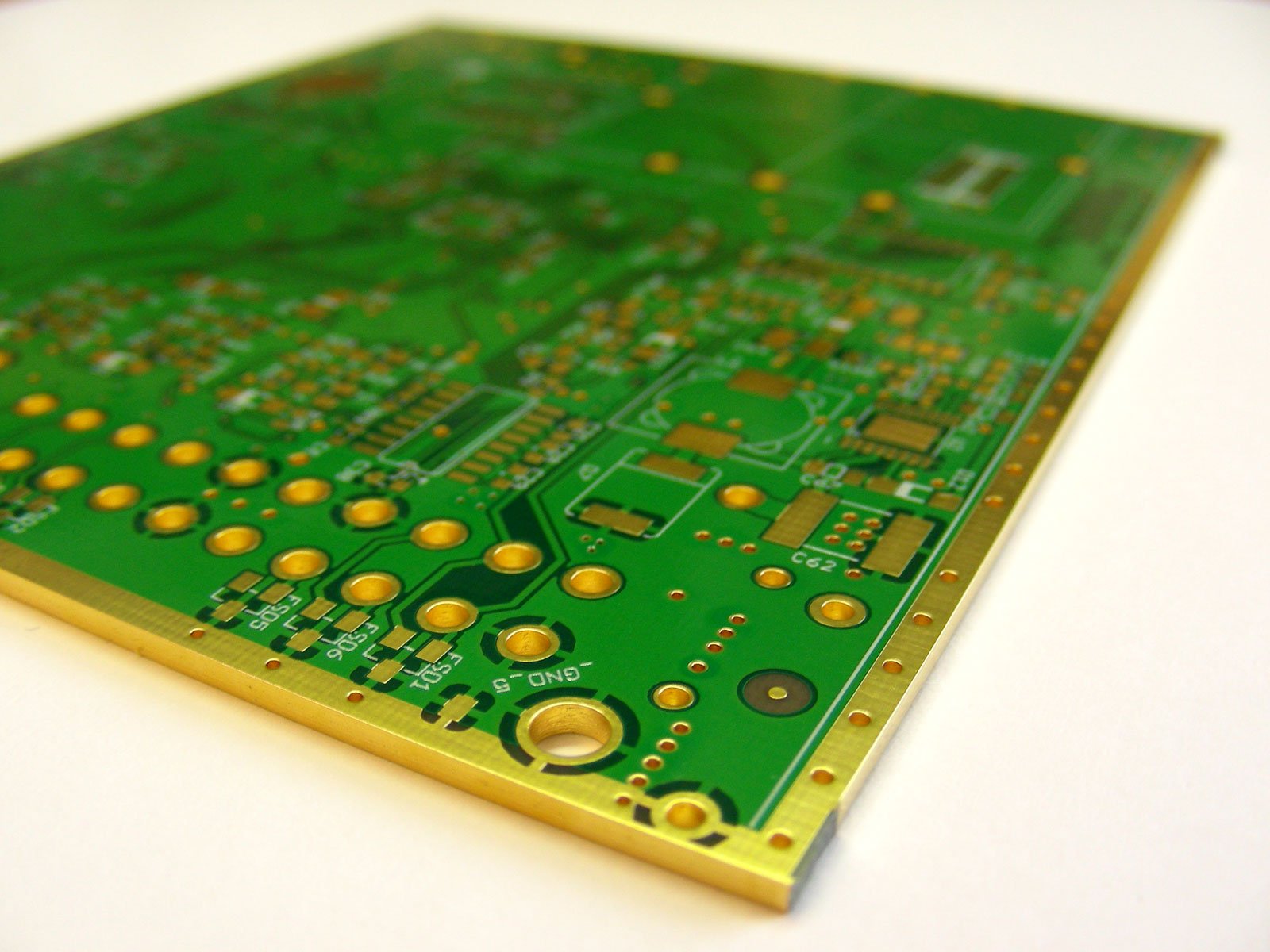
In the PCB manufacturing industry, immersion gold and electroplating gold are widely used due to their excellent solderability, conductivity, and oxidation resistance. However, the high price of gold makes it a major component of manufacturing costs. To effectively reduce this cost, refined management needs to be carried out from three dimensions: design, process selection, and process control.
First, introducing "selective surface treatment" at the design stage is the most direct way to reduce costs. For high-density, high-precision complex circuit boards, it is unnecessary to apply immersion gold to the entire board. By designing a mixed surface treatment scheme such as "gold immersion with OSP" or "gold immersion with chemical tin plating," the gold immersion process is only applied to key pad areas that require wire bonding, button contacts, or connector insertion, while less costly OSP (organic solderability preservative) or chemical tin plating is used on heatsinks or ordinary wiring areas. This zoned treatment can directly reduce gold salt consumption by 50%-80%.
Second, implement "precise thickness control" in process management. The thickness of the gold plating layer is directly proportional to the cost; every 0.05 μm increase in gold thickness can lead to more than a 20% surge in gold salt cost. Therefore, the mindset of "the thicker, the more reliable" should be abandoned. Under the premise of meeting product storage life and solderability requirements (for example, conventional immersion gold only needs 0.05-0.1 μm), advanced XRF (X-ray fluorescence) coating thickness meters and closed-loop control systems should be used to monitor and adjust the gold ion concentration and deposition rate in the plating bath in real-time, ensuring that the gold layer thickness is uniform and accurately controlled at the standard minimum, avoiding waste caused by excessive thickness.
In addition, introducing "alternative surface treatment processes" is key to structural cost reduction. For consumer electronics or communication module products that only require wire bonding or ordinary soldering, consider replacing "hard gold (immersion gold)" with "soft gold (electroplated gold)," or using "Electroless Palladium Immersion Gold (EPIG)." Palladium and silver are much less expensive than gold, and the EPIG process can provide a flat surface and reliability comparable to immersion gold, while reducing material costs by more than 30%.
Finally, strengthen "production line maintenance and chemical management." By regularly replacing filters and preventing plating solution contamination, the service life of the gold bath can be extended; at the same time, gold ions in rinse water can be recovered and refined through electrolytic recovery devices, turning waste into value.
In summary, through precise design choices, strict thickness control, and reasonable process alternatives, PCB manufacturers can effectively reduce the cost of immersion gold and electroplated gold while ensuring product quality.
How to choose SMT chip inductors in PCBA processing?
Methods to Reduce PCBA Costs Through PCB Design


SEND MESSAGE