
PCBA Testing Methods: Which One Do You Need?
2026-06-01
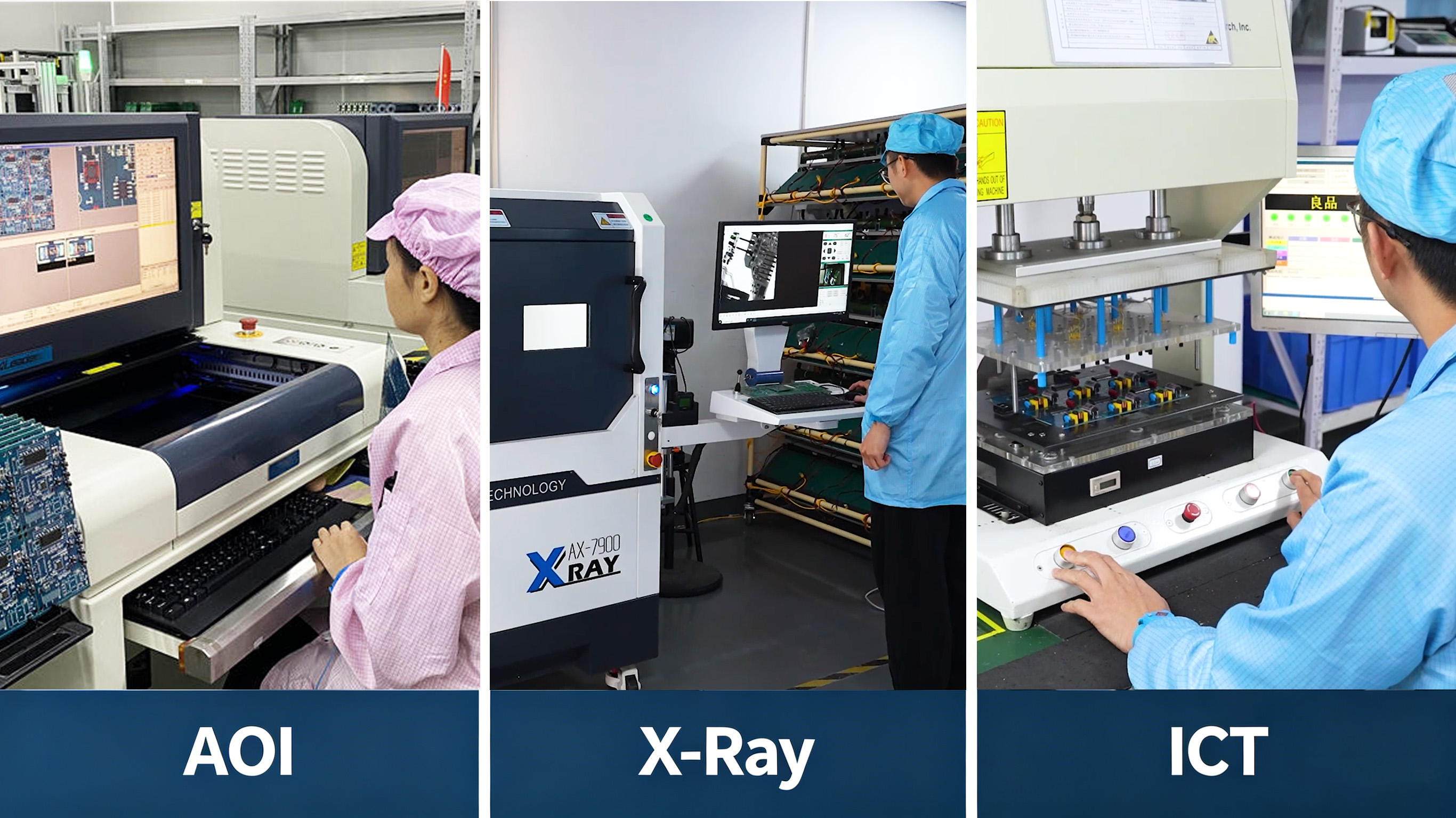
Not all PCBA testing is the same.
Each method catches different defects. Using the right one saves money and prevents field failures.
Here are 5 common testing methods and when to use each.
Comparison Table
Test Method What It Catches Best For Cost
Visual Inspection Missing components, polarity errors Prototypes, low volume Low
AOI Solder bridges, tombstoning, misalignment Medium-high volume Low-Medium
X-Ray BGA voids, hidden shorts, head-in-pillow BGA, QFN, shielded parts Medium
ICT (In-Circuit Test) Shorts, opens, wrong component values High volume, identical boards High (fixture)
Functional Test Board works as designed All volumes, critical applications Varies
Quick Selection Guide
Your Situation Recommended Test
Prototype, 1–10 boards Visual + Functional
Small batch, no BGA AOI + Functional
Boards with BGA/QFN AOI + X-Ray + Functional
High volume, simple design AOI + ICT
Medical, automotive, aerospace All of the above
Prototype, 1–10 boards Visual + Functional
Small batch, no BGA AOI + Functional
Boards with BGA/QFN AOI + X-Ray + Functional
High volume, simple design AOI + ICT
Medical, automotive, aerospace All of the above
STG Electronic Testing Standard
- AOI – 100% of boards
- X-Ray – 100% of BGA/QFN boards
- Functional Testing – Available on request
- ICT – Available for high-volume orders
Don't Skip Testing
One undetected defect in the field can cost 10x your PCBA price in returns and reputation damage.
Ready for a Testing Plan?
Send your Gerber + BOM + test requirements → 24hr quote with test recommendation
PCB Material Selection: FR-4, Aluminum, or Polyimide?
PCBA Lead Time: 5 Factors That Affect Delivery
Related Article



SEND MESSAGE